Elderberry (Sambucus nigra v. canadensis) Plants - Various cultivars
Clonal plant grown on its own roots, Overwintered after 1 year of growth, Some are growing from last year’s wood, some are sending up fresh shoots. Either way, you are getting a small plant, but they tend to grow quickly/
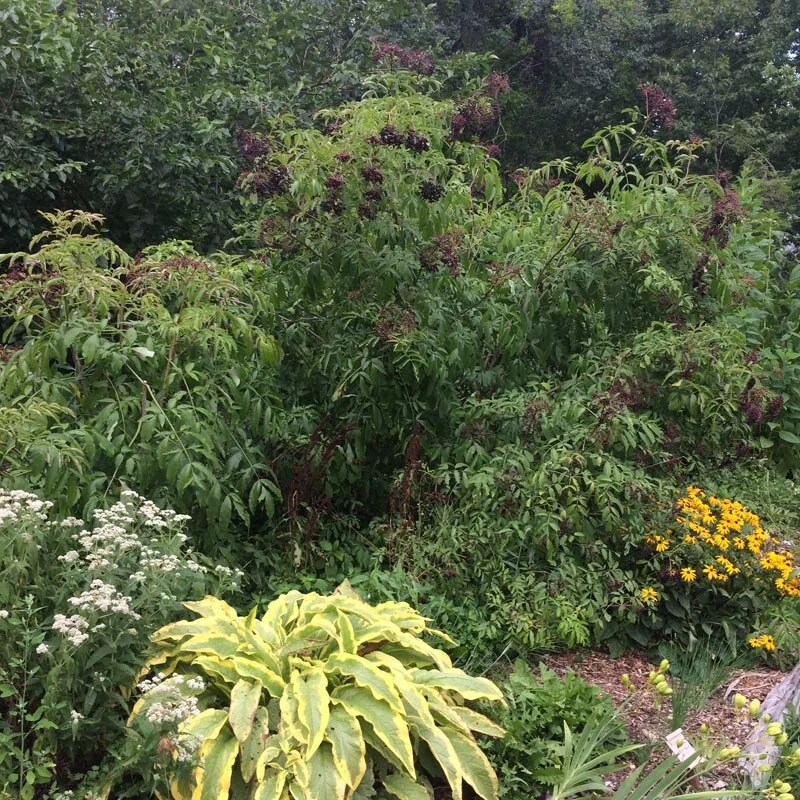
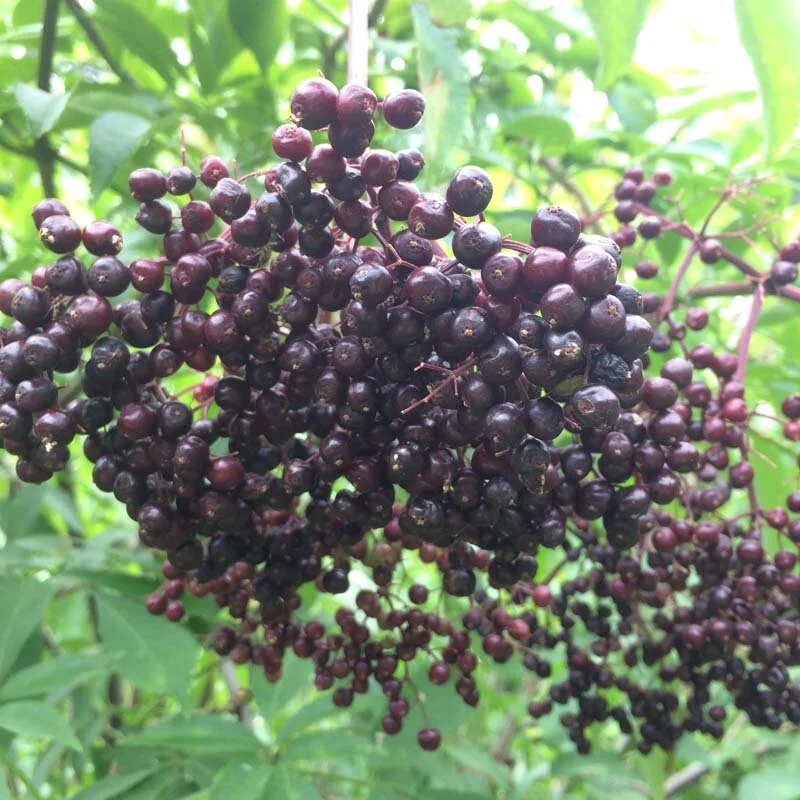
Elderberries are beautiful, upright suckering shrubs, with high medicinal and food value. All parts of the plant have a history of medicinal use, although the berries and flowers are most commonly used. Berries should not be eaten raw in quantity, but are excellent in jams, jellies, syrups and baked goods. Needs another clone or seedling for pollination. They produce best in full sun, they enjoy being on the edge of a damp spot and tolerate seasonal flooding.
Edgewood Wild - This is a clone of the local ecotype.
Barn - Local type, extra productive, selected by Elwyn Meader.
York - Possibly a hybrid of European and American types, large fruit, highly productive.
Wydlewood - very productive and vigorous cultivar, originally collected from the wild in Oklahoma.
Bob Gordon - Productive cultivar known for early blooming and regenerating quickly from coppicing. Originally collected from the wild in Missouri.
Variegated - Ornamental variety with white edges on the leaf, not good for fruit production.