Ginkgo (Ginkgo biloba) Seeds or Plants
Packet contains ~20 seeds,
Bulk Packet contains ~60 seeds. Fresh seeds stored cool and damp.
Seedling plants are second year and 4”-12+” tall.
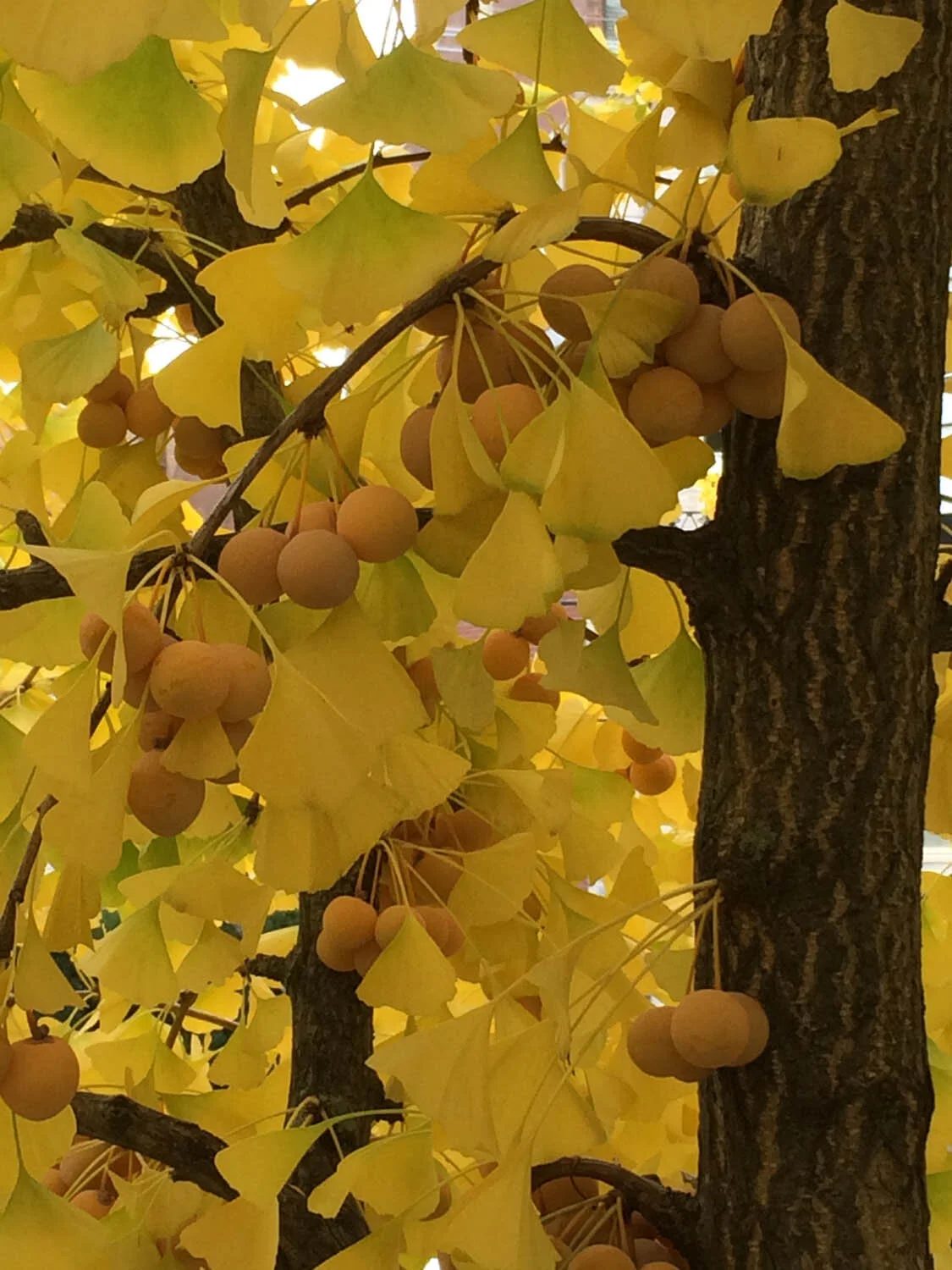
Ginkgo is better known in this area as being a living fossil and for their medicinal leaves, but the most exciting harvest for me is the nuts. Ginkgo nuts come in a soft plum like fruit, which smells like stinky cheese (or worse) and is NOT human edible, in fact you should always use gloves when handling broken fruit as the fruit contains a similar irritating compound to poison ivy (but in lower concentrations). Once the fruit is mushy you can separate them from fruit and leaves easily by putting the whole mess in a bucket of water and blending with a mortar mixer. After cleaning the nuts need to be cooked, I usually pan fry them with a little salt , many of the nuts will pop like popcorn, exposing a delicious exploded nut meat that takes like edamame. If you want a sweet treat, season your fried Ginkgo nuts with a little cinnamon and sugar. The cuisines that have used Ginkgo for 1000s of years (ie Chinese and Japanese) have have many different ways to prepare them that I don’t know much about. While I’m always excited about harvesting and eating Ginkgo, they are not a staple food, when first eating them you should only eat a few nuts and then wait a day or two and observe any reaction. Even if you have no reaction you should limit yourself to occasional consumption of moderate amounts as Ginkgo contains a anti-nutrient that blocks the absorption of Vitamin B6 if you eat lots of a extended period. Not something most people need to worry about, but worth mentioning.
Ginkgo leaves have been used in Eastern Herbalism and TCM for centuries. The green and yellow leaves are said to have different properties. Ginkgo is contraindicated in pregnant and nursing people and anyone who is highly allergic to poison ivy, mango or cashew.
These trees are dioecious, meaning you need both male and female trees to get fruit, so if you want fruit plan on planting at least 3. They are slow growers, so these trees may be your legacy to future generations rather then trees you will harvest from anytime soon. Even if you don’t want the fruit they are beautiful and interesting landscape trees.
Seeds should be kept damp and cool until March or April, then planted 1/2” deep. In northern location you may want to grow in containers for the first year so seedlings can be protected over their first winter. Direct sowing also works fine.